
On the morning of March 20, 2025 (Berlin Time), Synergie Research Institute (Synergie GmbH) and the Institute of Agricultural and Urban Ecological Projects at Humboldt University of Berlin held a strategic partnership signing ceremony at the Einstein House by Lake Schwielowsee, announcing deep cooperation around "Synergie Solutions" crop application experiments. Dr. Georg Ebert, CEO and Chief Scientist of Synergie Research Institute, together with agricultural experts from Humboldt University of Berlin, attended the event, marking a crucial step in agricultural technology innovation and sustainable development.
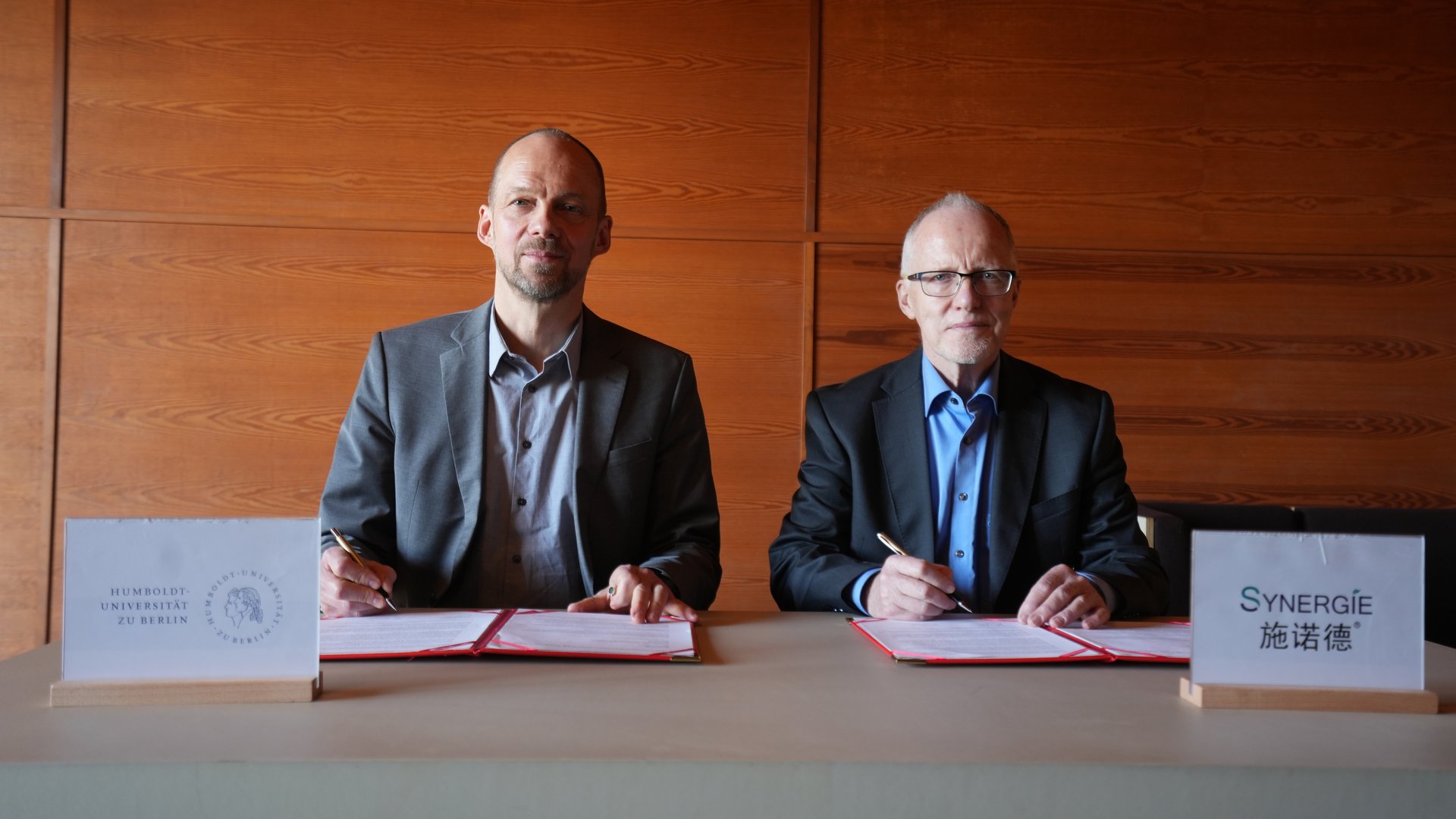
Powerful Alliance: Deep integration of research and practice
Humboldt University of Berlin, known as the "Mother of Modern Universities," possesses deep heritage in humanities and natural sciences, with its agricultural research team focusing on crop physiology, ecological adaptation, and resource efficiency. Synergie Research Institute is world-renowned for biostimulants and ecological Nutrient Enhancement technologies. Its "Synergie Solutions" have demonstrated significant efficacy globally by enhancing Nutrient Use Efficiency and crop stress resistance. This partnership leverages Humboldt University's leading agroecological laboratories and field trial systems to provide scientific data verification for Synergie Nutrient Enhancement technology.
Technological Core: Biostimulants and enhancement synergy
Dr. Georg Ebert emphasized at the signing ceremony that biostimulants are one of the key tools for the green transformation of agriculture. Their function is not to directly provide nutrients but to improve nutrient absorption efficiency and stress resistance by activating crop metabolism and improving the rhizosphere environment. The Synergie Nutrient Enhancement program integrates biological, chemical, and other enhancement technologies to create a synergistic effect between biostimulants and stabilized nitrogen fertilizers, which can reduce environmental pollution while achieving dual improvements in crop quality and yield. Experts from Humboldt University stated that this cooperation will deepen basic research on enhancement mechanisms and provide data support for technological optimization, assisting the global promotion of the technology.

Historical Origins & Future Vision
Choosing Einstein's former residence for this signing not only pays tribute to the scientific spirit but also echoes the historical foundation of the cooperation between the two parties. As early as 2022, the Synergie Research Institute collaborated with Humboldt University to conduct maize field trials, the results of which were highly recognized in the European agricultural community. In the future, both parties plan to expand the scope of cooperation, including conducting international academic exchanges and exploring the integrated application of digital agriculture and precise fertilization technologies.
Dr. Georg Ebert emphasized: 'Facing the challenges of global climate change and food security, industry-university-research collaborative innovation is the way to break through. We look forward to providing a more resilient technological paradigm for sustainable agricultural development through this cooperation.' Dr. Muskolus from the Institute of Agricultural and Urban Ecological Projects at Humboldt University of Berlin pointed out that this cooperation is a contemporary practice of the 'Humboldt Spirit'—promoting social progress through scientific freedom and translating laboratory achievements into field productivity.
About Humboldt University of Berlin
Founded in 1810, the university has nurtured 57 Nobel laureates, and its agricultural and life sciences research ranks at the forefront of the world. Its plant physiology and ecology teams have long been dedicated to climate-resilient crop research. This signing is not only an upgrade of the cooperation between the two institutions but also marks the leap of agricultural technology from a single technological innovation to a systematic solution.

